Once the manufacture of a new injection mould tool is complete, it isn’t necessarily ready to go straight into production.
Injection mould tool trials allow us to test the newly manufactured tool, produce sample components and identify any changes that may be required before the tool is approved.
But what actually happens during a tool trial, and what are we looking for throughout the process?
What are injection mould tool trials?
Injection mould tool trials are the initial testing stages carried out once a new mould tool has been manufactured.
During a trial, we run the tool in an injection moulding machine to produce sample components. This allows us to assess both the operation of the tool and the quality of the parts it produces.
We look primarily at two areas in parallel: visual quality and dimensional accuracy.
Visually, we are looking for issues such as flash, gassing, scuffing, ejector marks, stress marks or warpage. Essentially, any defects that appear that affect the part’s appearance. Dimensionally, samples are inspected against the approved 2D component drawing and its specified tolerances.
Processing information including material, temperatures, pressure and component weight can also help us understand how effectively the tool is performing.
What do T1, T2 and T3 mean in tool trials?
The terminology used for injection mould tool trials can differ between toolmakers, so T0, T1, T2 and T3 won’t necessarily mean exactly the same thing everywhere.
At Liondell, our trial process begins at T1, when the first sample components are produced and assessed.
What happens at T1?
T1 is the first opportunity for us to see how the newly manufactured tool performs and inspect the components it produces.
At this stage, we expect that some refinement may be required. Initial samples can show issues such as flash, gassing, ejector marks or scuffing. Areas of the tool may also require further polishing or venting.
We also consider the processing conditions used during the trial. One useful measurement is component weight. We can compare the actual moulded part against the theoretical weight calculated from the CAD model. If the component is significantly under its expected weight, for example, it could indicate that the part hasn’t completely filled.
Following T1, the results are reviewed and any necessary adjustments can be made before the tool is trialled again.
What happens at T2?
By T2, we expect the issues identified during the first trial to have been addressed.
New samples are produced and assessed again both visually and dimensionally. There may still be areas requiring refinement, but the objective is for the tool and resulting components to be much closer to the required standard.
Where a component requires a specified texture, this also needs to be introduced at an appropriate stage. Texture itself can affect how a component releases from the tool, so subsequent trials can be used to make sure it hasn’t introduced issues such as scuffing.
What happens at T3?
T3 is generally the final verification stage in our process.
By this point, the objective is for the tool to consistently produce components that meet both the visual requirements of the project and the dimensional tolerances specified on the component drawing.
However, simply reaching something labelled “T3” doesn’t automatically mean a mould tool is ready for production.
What about T4 and onwards?
Further tool trials beyond T3 can sometimes be necessary but in our experience, they ideally should be avoided.
Each additional trial requires further time, material and resources. It means allocating machine capacity that could otherwise be used for production, additional engineering time to assess the results, and potentially extending the overall project timeline.
This is why identifying and addressing issues systematically between each trial is so important. Our aim is to achieve final sign-off by T3 at the latest, and in some cases we have been able to achieve sign-off at T2.
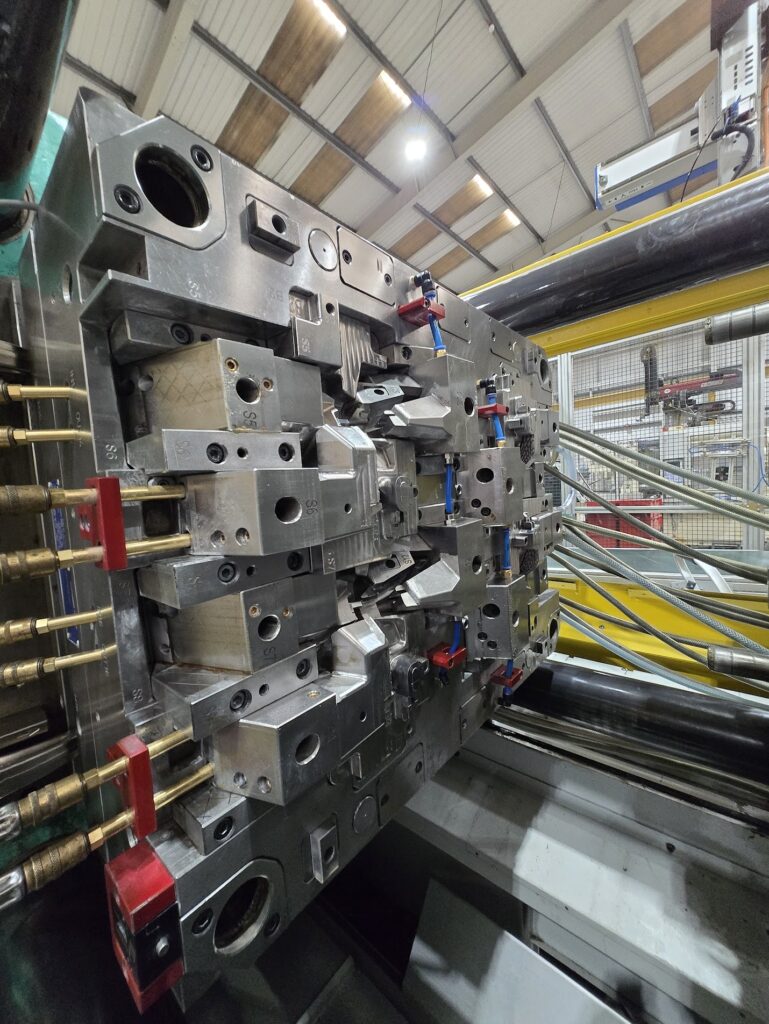
Mould tool in press
What happens if we find a problem during a tool trial?
One important part of injection mould tool trials is understanding why a problem has occurred.
A defect in a sample doesn’t necessarily mean the mould tool itself is wrong. The cause could relate to the component design, mould tool, selected material or the processing parameters being used.
Identifying the cause allows the appropriate change to be made before the next trial rather than simply modifying the tool without understanding the underlying issue.
How do I get insight into the trials?
Throughout the trial process, we record key information including machine and material data, mould temperatures, component weights, photographs, videos and inspection results. This provides a consistent technical record that we can refer back to as the tool progresses through each trial.
An ISIR (Initial Sample Inspection Report) is also provided, recording the measured dimensions of the moulded samples against the specified dimensions and tolerances on the approved 2D drawing. This helps identify any areas that may require further adjustment before the tool can be signed off.
Our bespoke database allows us to accurately cross-reference important project information, including part dimensions, materials, component weights and the machines used during trials. Keeping this information together also allows us to track changes between trials and maintain clear visibility throughout the project.
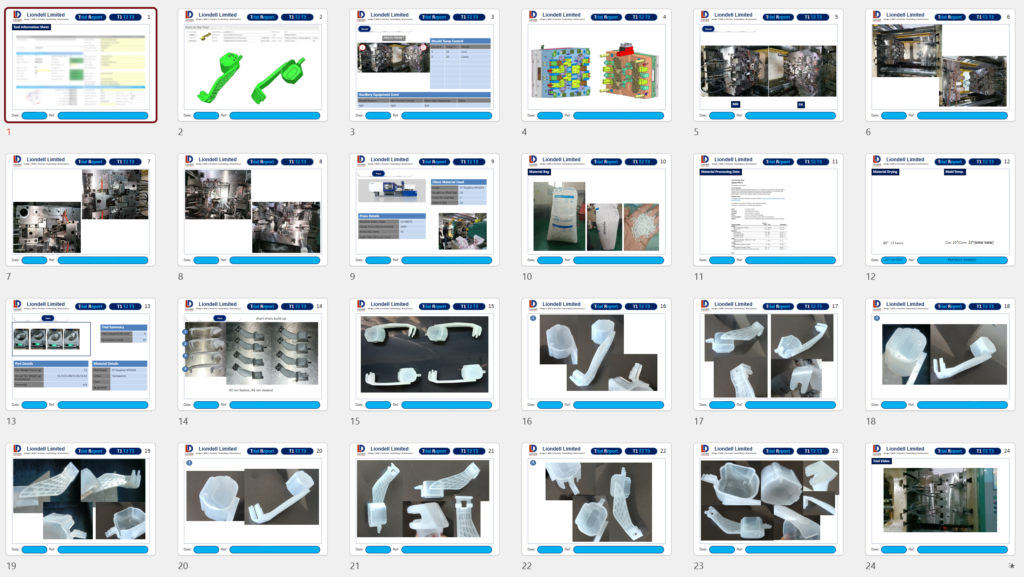
Typical tool trial report
When is an injection mould tool ready for production?
For us, the important factor isn’t simply whether a tool has reached T2 or T3. It is whether the tool can repeatedly produce acceptable components under stable production conditions.
The resulting parts need to meet the agreed visual requirements as well as the dimensional requirements set out in the component drawing.
A systematic trial process helps us identify and resolve potential issues before a tool reaches the customer, reducing the need for unnecessary additional trials, modifications and project delays.
At Liondell, we manage injection mould tooling projects from initial engineering review through manufacture, tool trials and final delivery.
If you’re currently planning a new injection mould tooling project, contact our team to discuss your requirements.
Additional Reading: