

Uniform wall thicknesses is one of the fundamental principles of successful injection mould tooling part design. Consistent wall thickness allows molten plastic to even flow through the mould, which is important in reducing defects and achieving a quality outcome for an injection moulded part.
It is one of the easiest issues to address during the design stage, but it can also be easily overlooked during product development. Designers understandably focus on appearance and functionality of a product, but material flow and cooling behaviour also need to be considered to prepare for manufacture.
Getting wall thickness right at the design stage is crucial in reducing tooling complexity and potentially reducing tooling costs.
What can happen?
During the manufacturing stage of an injection moulded component is when the effects of uneven wall thicknesses will become apparent. What are these telltale signs?
It is during the manufacturing process that the effects of uneven wall thicknesses quickly become apparent. A component can look acceptable in CAD, but uneven wall sections introduce a range of manufacturing defects that are worth looking out for.
Defects include but are not limited to:
- Uneven melt flow
- Short shots
- Fusion marks
- Warping
Defects undermine both the appearance and structural performance of an injection moulded component. Making necessary changes to the design is much easier- and less expensive- prior to manufacture.
Wall thicknesses influence various stages of the manufacturing process.
Filling phase
During the filling phase, a part that has 2mm thin walls and 6mm thick walls for example, material will not flow in a uniformly.
Thicker sections behave differently to thinner sections, increasing the likelihood of incomplete filling which is known as short shorts. Short shots weaken the whole product in performance and appearance.
Cooling stages
Once a mould has filled, the part begins to cool.
Thicker sections take longer to cool than thinner sections. If you have inconsistent thicknesses in a part, this uneven cooling can cause the part to warp and introduce internal stresses.
Stress concentrations are particularly common where thick and thin wall sections meet.
Holding pressure
Holding pressure is applied after the cavity has filled to compensate for material shrinkage as the plastic cools.
Thicker parts can require additional material to compensate for shrinkage, while thinner sections may suffer from over-pressurisation if process settings are not carefully controlled. The result can be sink marks, dimensional inaccuracies and an overall inconsistent part quality.
For more intricate injection moulded parts, tooling trials are often used to refine processing parameters and minimise these types of defects before production begins.
How to avoid wall thickness issues
Fortunately, many wall thickness issues can be identified before tooling begins through a thorough Design for Manufacture (DFM) review.
By assessing the part from a manufacturing perspective, tooling engineers can recommend small design improvements that reduce risk while improving mouldability and overall project cost.
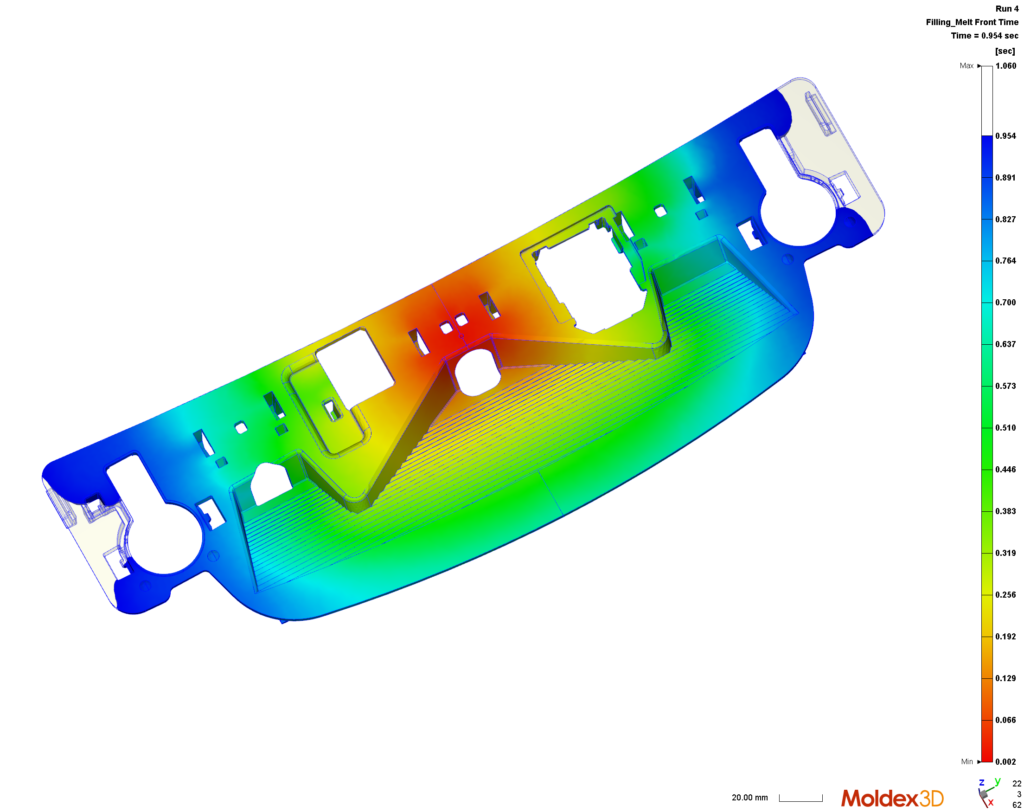
Part of a thorough DFM should include Mould Flow Analysis (MFA), which helps highlight issues in the part design or moulding process.
Some common design principles include:
Maintain consistent wall thickness
Wall thicknesses should remain consistent throughout the part where possible. If changes are necessary gradual changes between thicknesses help reduce stress concentrations and encourage more even material flow.
Use ribs instead of thicker walls
Rather than increasing wall thickness, it is generally recommended to utilise ribs to strengthen walls. For taller walls, ribs are encouraged to reinforce them without creating excessive material build up or extending cooling times.
Consider melt flow behaviour
Strategic placement of gates helps balance material flow throughout the component. This helps reduce the risk of short shots.
Optimise cooling and holding pressure
Cooling channels should be designed to provide even heat dissipation across the mould. Holding pressure should be adjusted to suit the varying section thicknesses. Both cooling and holding pressure can help reduce common defects.
Incorporate radius into part geometry
Ensure sharp corners have radius to allow the melt fronts to flow more evenly when filling the part.
Material selection
The material an injection moulded part is made from should also be considered. Different polymers have varying characteristics in terms of material flow, shrinkage rates and mechanical properties.
Designers should consider the following factors when considering materials:
- UV resistance
- Operating temperature
- Flame resistance
- Required strength or flexibility
- Surface finish and appearance
- Colour or paint requirements
When a material is chosen that best suits the practicalities of the part, can help determine appropriate wall thicknesses. Additionally, during a standard DFM, alternative materials can be suggested that may suit the existing design better.
Conclusion
Wall thickness may appear to be a small design detail, but as we’ve explored, it can have a significant impact on the manufacturability, quality and cost of an injection moulded component.
Partnering with an experienced tooling supplier helps identify design considerations like these before tooling begins, reducing manufacturing risks and avoiding costly modifications later in the project. Small changes made during the design stage can often improve mouldability, reduce tooling complexity and give your project the best chance of success from the outset.
At Liondell, every tooling quotation includes an engineering review of your part. Where appropriate, we’ll provide recommendations and design insights before a full Design for Manufacture (DFM) assessment, helping you move forward with confidence.
Planning a new injection mould tooling project? Get in touch with our team today for a free quotation and complimentary engineering review.
We’ve spoken more about wall thicknesses and other challenges of the injection moulding process here.
Additional Reading