Introduction
Did you know that even the most polished injection mould tools can look great, but still be inappropriate for it’s intended use?
We talk often about risks in plastic injection mould tooling, focusing on design and manufacture. But an area of risk that is generally overlooked and forgotten about; over-engineering.
Sometimes, injection mould tools can become more complicated than they need to be. Extra features, premium finishes and in general higher specifications may be added in the name of creating a ‘better’ tool. This is often unnecessary, as these additions can complicate manufacture, increase costs as well as introduce more chance for risk in the moulding process.
A good mould tool is not necessarily the most complex tool- it’s a tool that achieves the required outcome reliably and efficiently.
What Over-Engineering Looks Like
As mentioned above, over-engineered tooling can pose significant risks to your project. What does over-engineering look like in practice?
A common example is part finish specification. An engineer may specify a high-gloss finish on a part to create a premium appearance. But a higher-level finish requires additional manual work and polishing during tool manufacture which increases tooling costs. In addition to this, finishes such as these can create problems during production.
On top of this, high-gloss surfaces can amplify the appearance of cosmetic defects on the finished part, making imperfections more visible. Over-polished finishes can create a vacuum effect inside the mould cavity, causing parts to stick during ejection. Leading to drag marks and part damage.
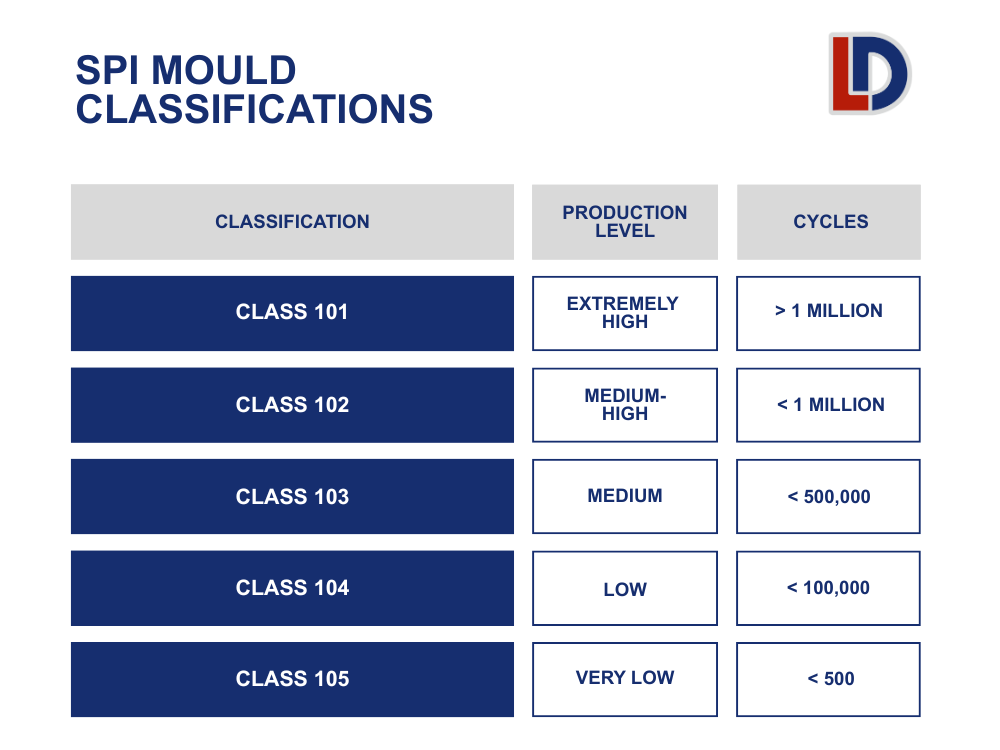
Another example is mould classification.
Mould tools intended for specific production volumes are designed and manufactured accordingly. A tool expected to manufacture hundreds of thousands or parts does not require the same construction as a tool expected to manufacture millions.
Applying a higher classification than required dramatically increases cost, because of the use of expensive steels, additional engineering and increased manufacturing requirements without delivering benefits to the final result.
What Liondell Does
In our experience, we believe tooling should be built to spec and nothing more.
We follow SPI standards during our process when selecting mould classifications, material selection and expected tool life. SPI standards provide a standard guide to toolmakers, designers and engineers to use as precise guidelines to select correct steel types and finishes.
Following recognised industry standards helps maintain consistency in cost and tool quality- avoiding unnecessary complexities.
The goal is not to build an expensive tool, but the right mould tool for your project.
Conclusion
For companies new to injection mould tooling, the necessity of adhering to SPI standards may not be known.
Tooling projects already involve significant investment and risk, unnecessary specifications can add further cost and risk.
Working with experienced and transparent tooling partners you can trust helps mitigate the risk of your project being designed for maximum profit over what’s best for the project.
Working on a tooling project? Get in touch today to discuss your needs.
Related Reading