Over on our LinkedIn, we talk a lot about risks in plastic injection moulding design. The impact of these decisions often only becomes visible during real-world use.
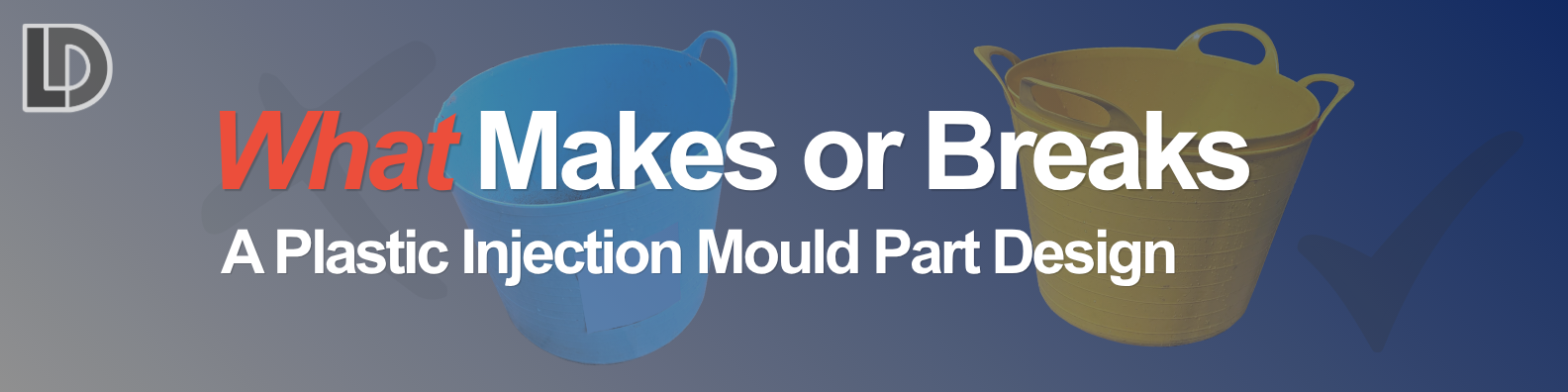
Recently, we showed how a bucket advertised as ‘heavy duty’, broke within a single use. This was a clear example of how products can fail during practical use, illustrating the impact of the design risks we often discuss.
Plastic injection mould part designs can look similar at a glance, but behave differently in real world use, which is why thorough design review is critical for the success of plastic parts.
The Broken Bucket
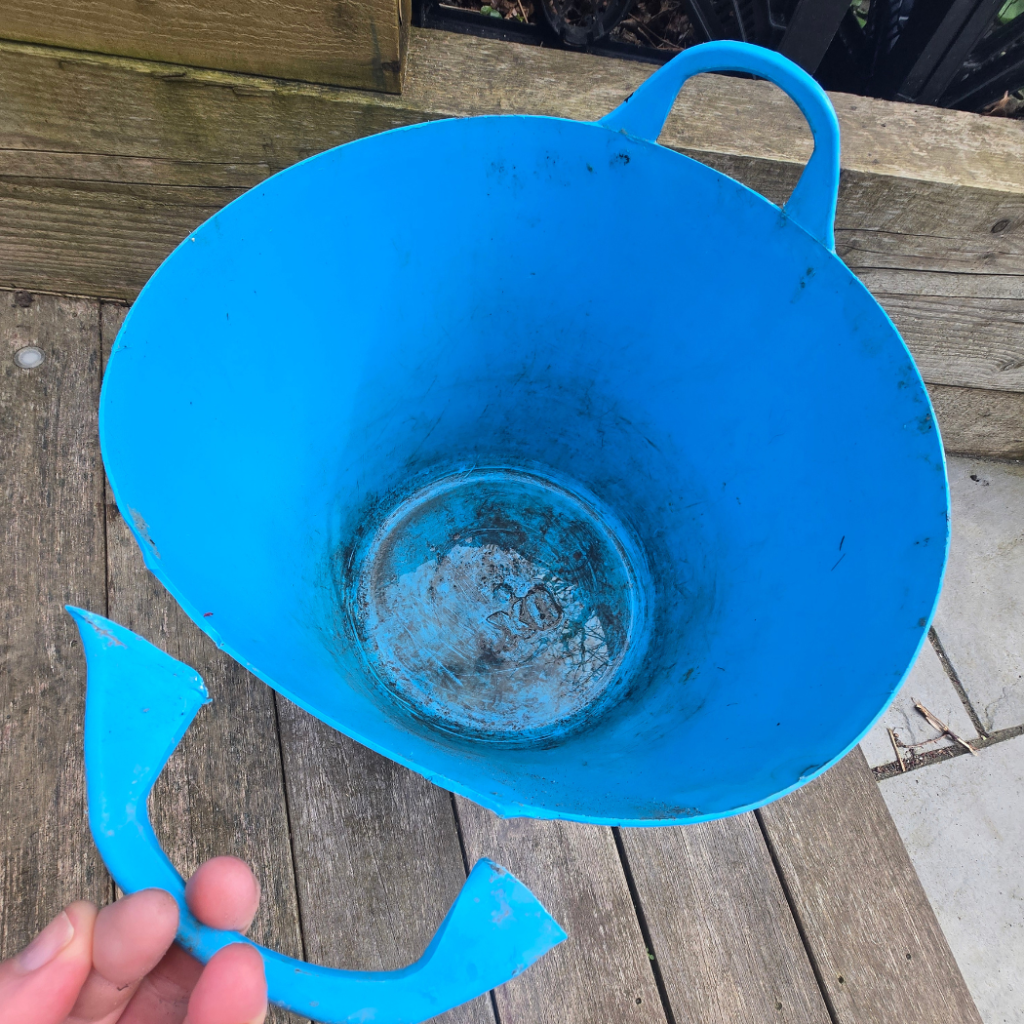
The original bucket broke at the handle. This breakage appeared to stem from the geometry of the handle design, a design flaw that was built in from the beginning.
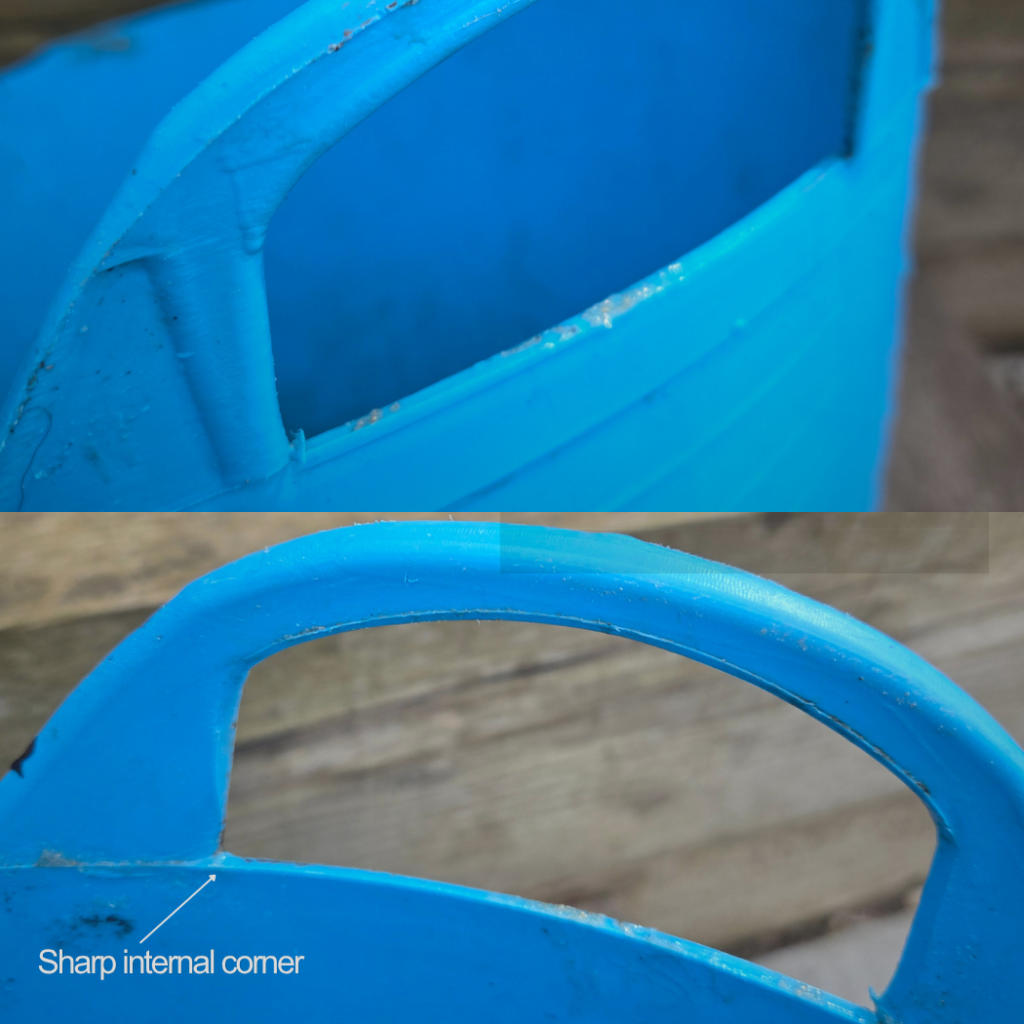
As you can see in the below image, the interior geometry of the handle contains a sharp internal corner, creating a stress concentration point under load.
Sharp internal corners concentrate force into a much smaller area of the part. Under repeated or heavy load, this localised stress can eventually lead to cracking, fatigue and premature failure.
A product marketed as ‘heavy-duty’ and then failing undermines user confidence immediately.
This design decision could have been mitigated at the design review stage, with a larger internal radius introduced to better accommodate load.
Replacement Bucket
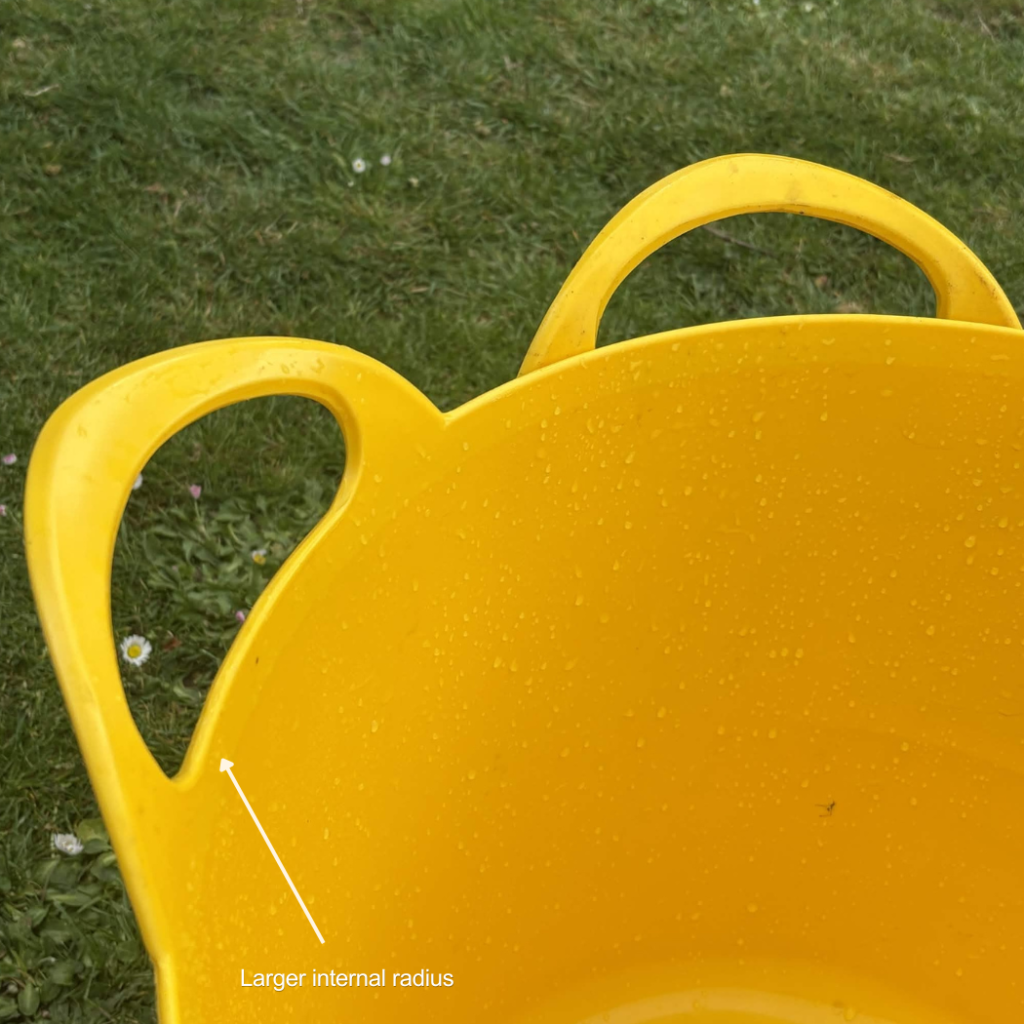
The replacement bucket succeeds where the previous bucket failed.
The bucket handles have a larger internal radius which reduces stress concentration around the handle area. This smoother geometry helps distribute load more evenly throughout the part during use, reducing the likelihood of localised stress build-up.
Small geometry improvements such as larger internal radii can significantly improve how plastic injection moulded products perform over repeated use and under heavier loads.
In Comparison
See below both buckets in comparison and how they perform.
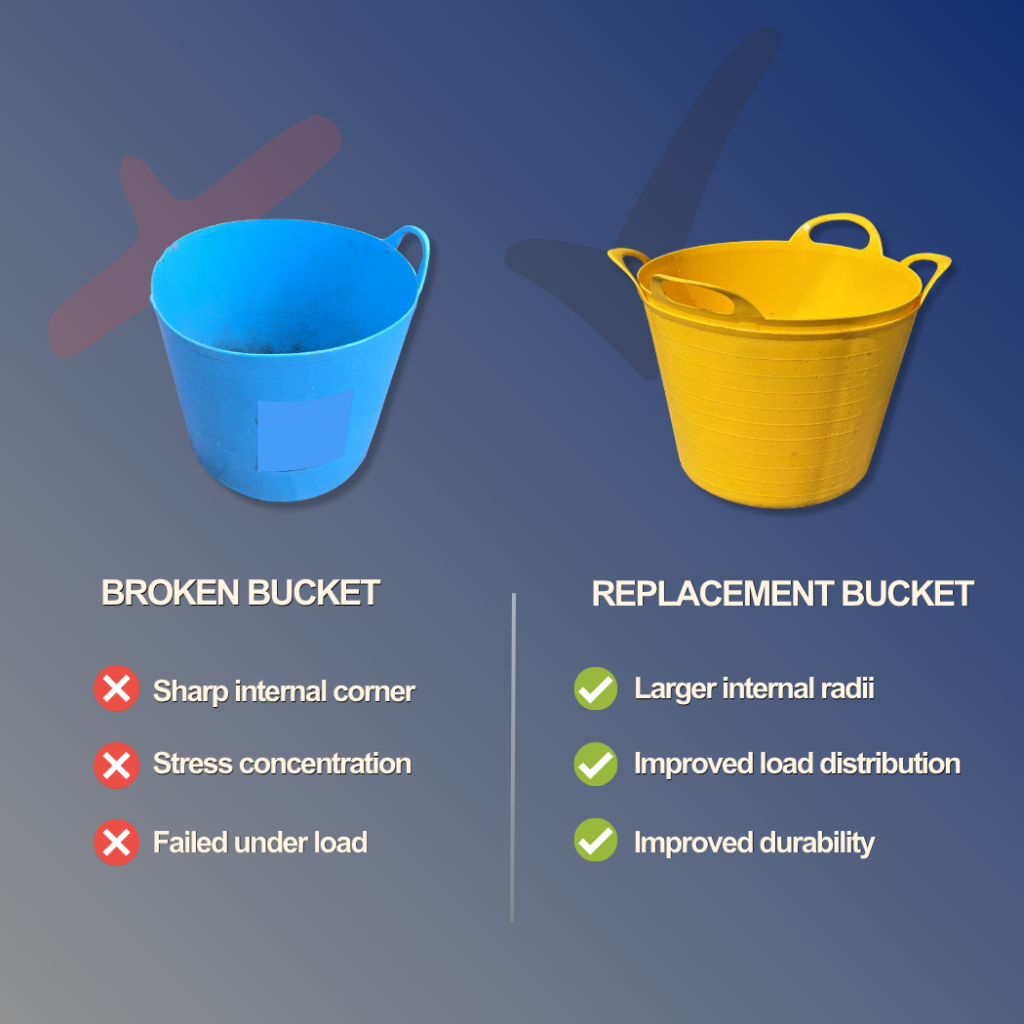
The performance of both buckets illustrates why early design decisions matter in plastic injection moulding.
Small design decisions have big impacts on how products perform in use.
And while on the surface a broken product is just a broken product, it’s also potential loss of customer loyalty and satisfaction with your product.
It’s important to build solid products from the ground up. Many long-term product issues are introduced, or prevented, during design review. This is why design review and tooling oversight are such critical stages within product development.
During design review for plastic injection moulding projects, relatively small adjustments to part geometry are often identified early to improve manufacturability and long-term product performance before tooling manufacture begins.
View our full design review process here.
Correcting these issues at the design stage is significantly easier than attempting to solve them once a mould tool has already been manufactured.
A successful product is one that continues to perform well over time in real-world conditions, over a product that is simply manufacturable.
Related Reading